Choosing the right patio material is one of the most consequential decisions in a garden project. Get it right and you have a surface that looks fantastic, requires minimal upkeep and adds real value to your home. Get it wrong and you have a weed-filled, stained or cracking surface within a few years. Here is a material-by-material guide based on real installations across Surrey.
1. Porcelain paving
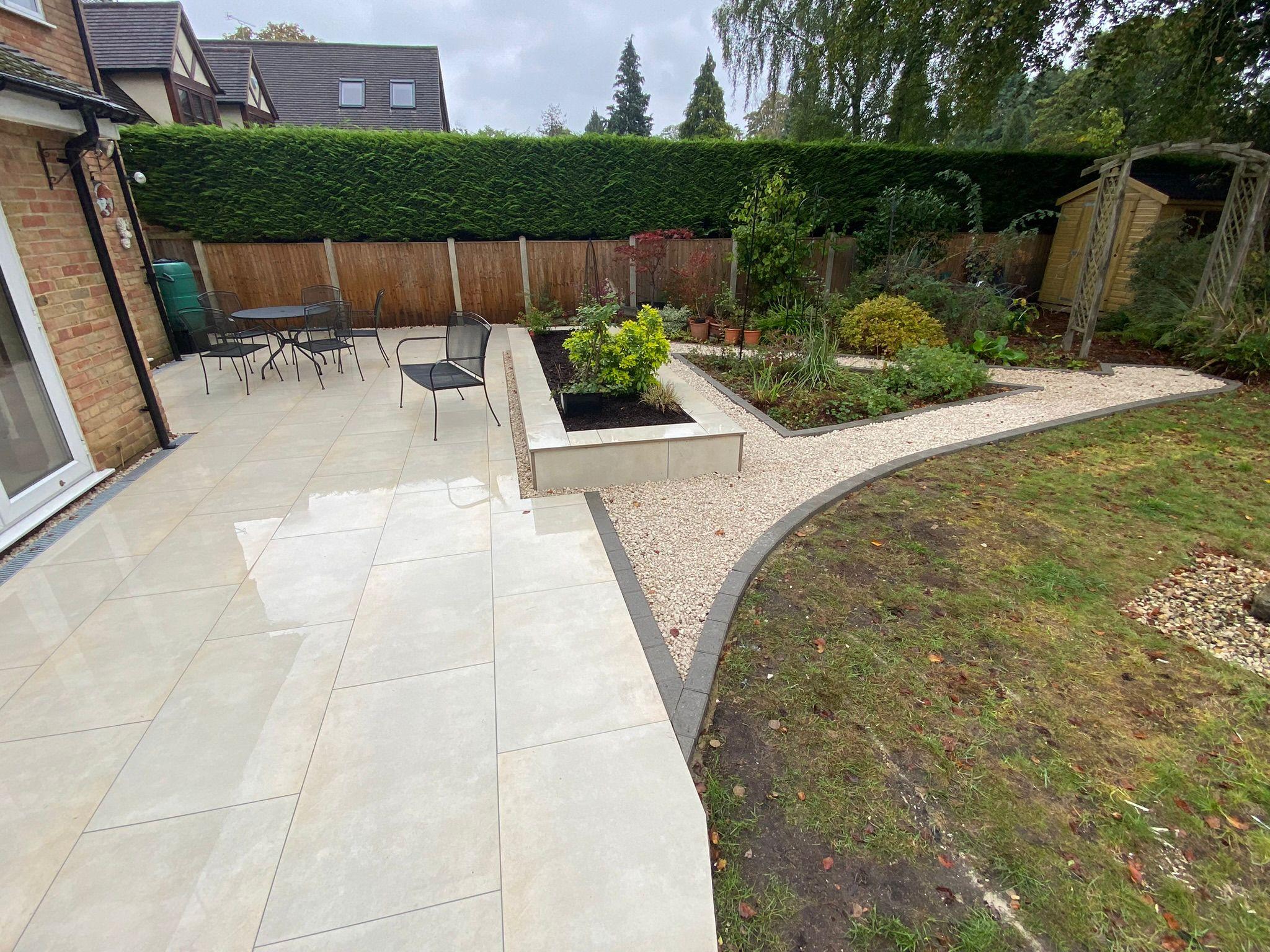
Porcelain has become the most popular patio material we install, and for good reason. Fired at extremely high temperatures, it is virtually non-porous, so it resists staining, does not need sealing, and a jet wash once a year keeps it looking like new. Large-format slabs (typically 600×900mm or 900×900mm) create a clean, contemporary look that works well with modern homes.
Quality has improved dramatically, stone and timber-effect finishes are now extremely convincing. The downside is that it requires careful installation: the slabs need full bed mortar and specialist cutting equipment. It is one of the more expensive options, but the long-term value is strong.
2. Indian sandstone
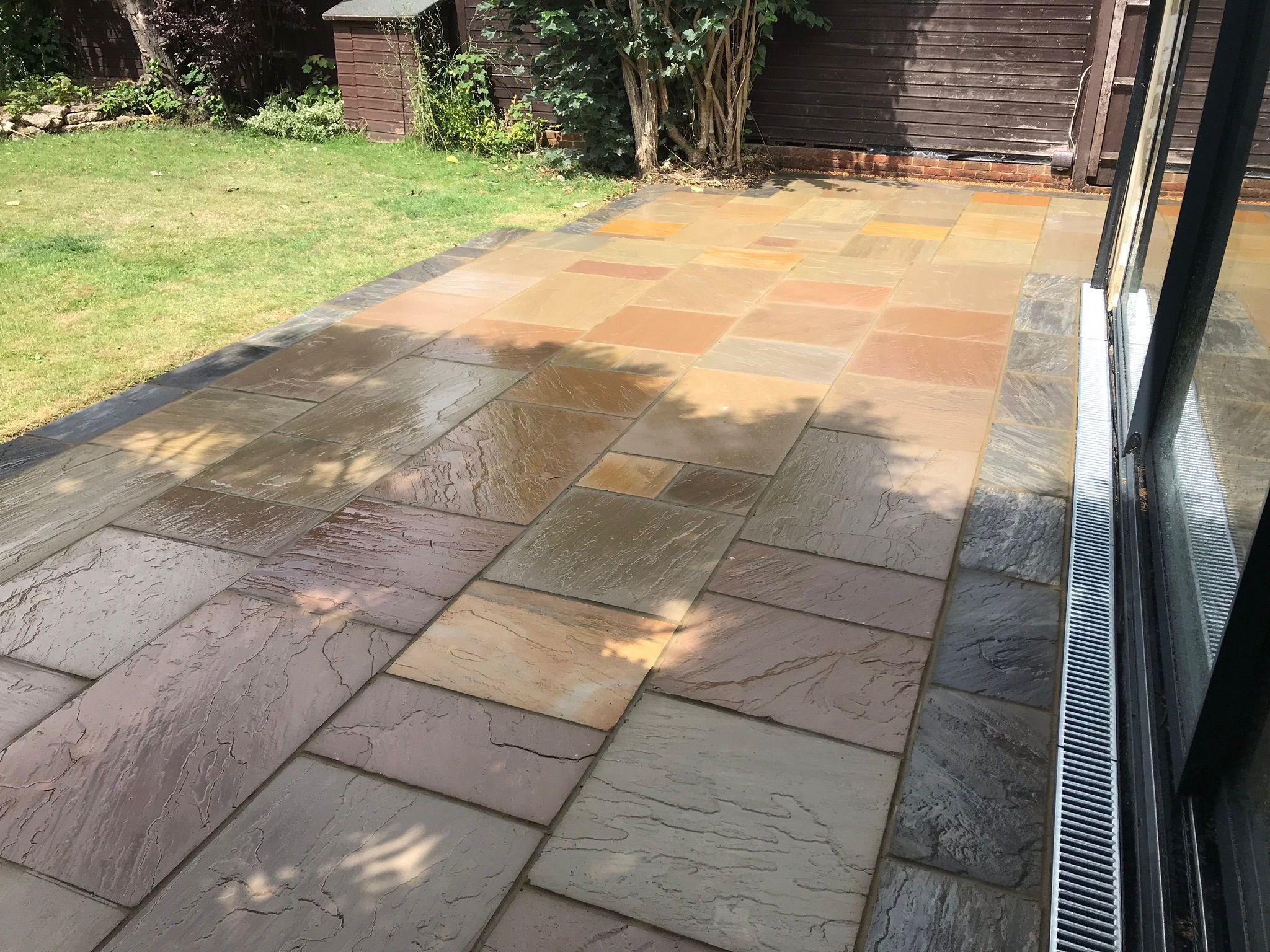
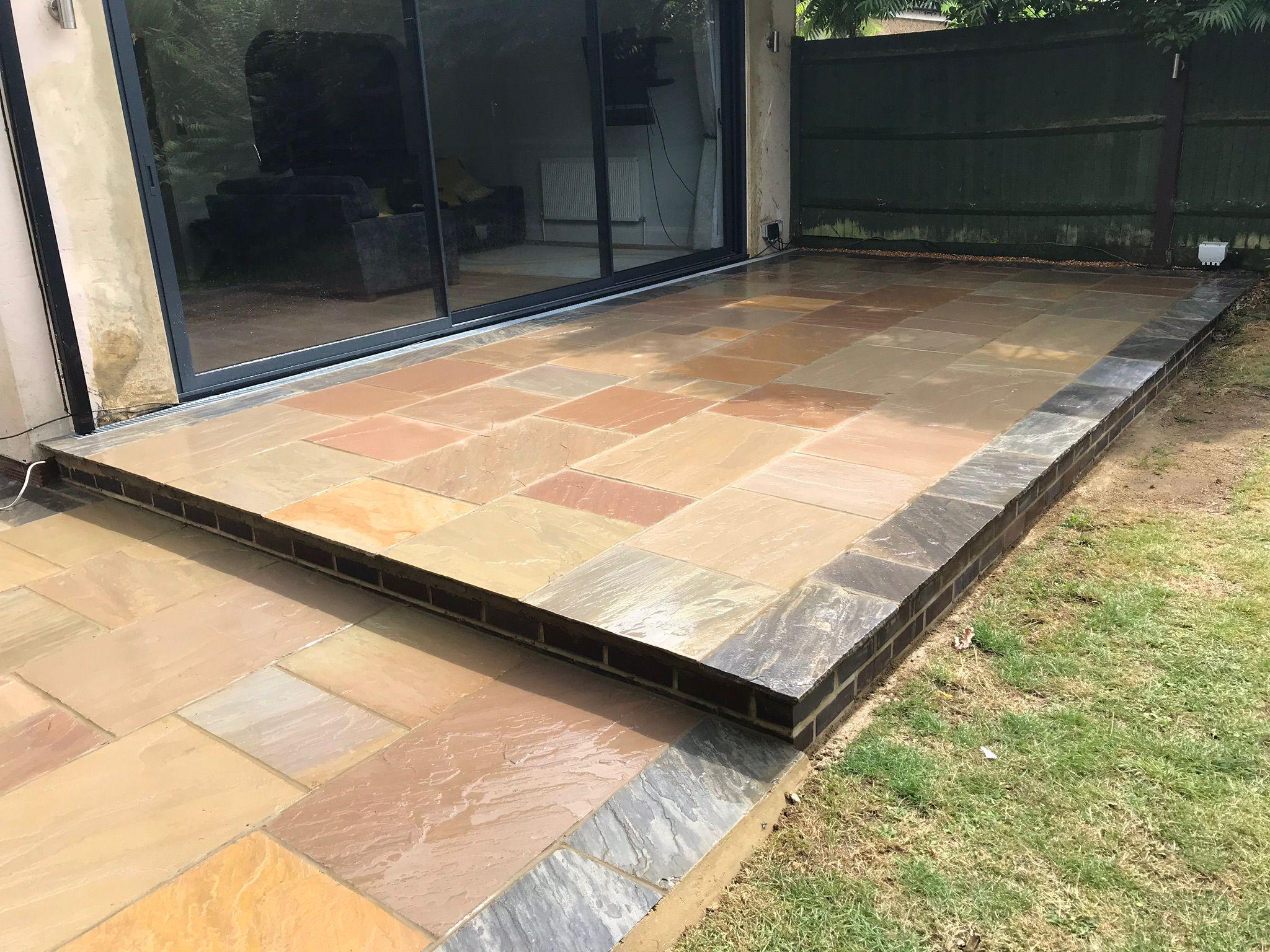
Indian sandstone has been the most popular natural stone in UK gardens for two decades, and it remains a beautiful choice. The warm tones, buff, autumn brown, kandla grey, work particularly well with traditional and cottage-style gardens. It is softer underfoot than porcelain and has a natural variation that many people prefer to the uniform look of engineered materials.
The main limitation is that it is porous and will stain if not sealed properly. A quality sealant applied every one to two years prevents most issues. The price point is lower than porcelain, making it attractive for larger areas.
3. Limestone
Limestone offers a cooler, more refined look than sandstone, typically available in light grey, silver-grey or cream tones. It is denser than sandstone and more stain-resistant, though still requires sealing. It works particularly well in contemporary or minimalist garden designs where its clean, consistent colouring is an advantage.
Limestone and sandstone both need a pH-neutral cleaner. Acid-based products will etch the surface. Avoid bleach products near natural stone.
4. Block paving
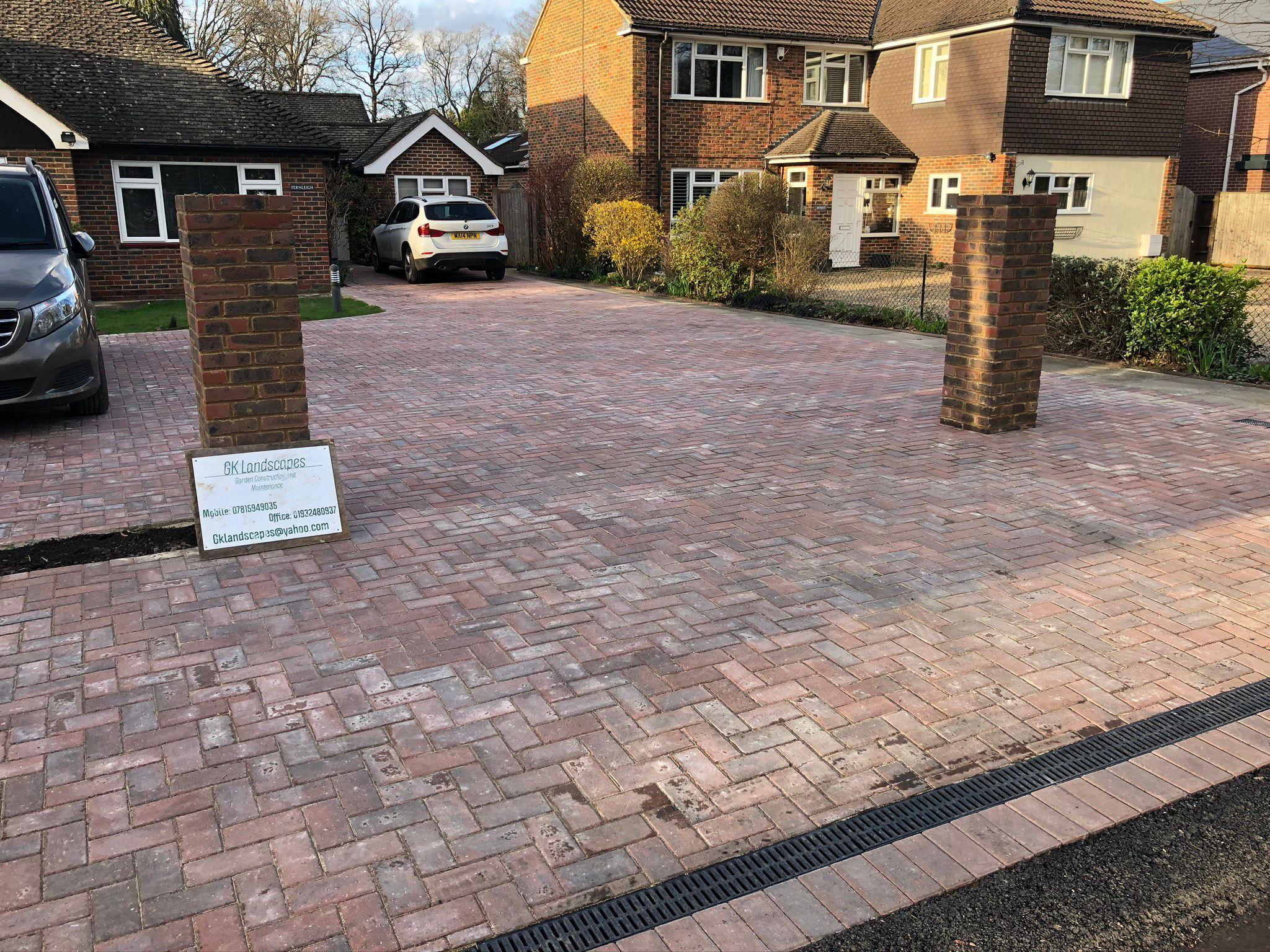
Block paving is primarily thought of as a driveway material, but it works very well for patios and courtyard spaces. Individual blocks can be arranged in herringbone, basketweave or stretcher bond patterns to create visual interest, and the textured surface provides excellent grip. If a section settles or cracks, individual blocks can be lifted and relaid.
5. Slate
Slate paving creates a dramatic, high-end look, deep charcoal and blue-grey tones work beautifully in contemporary gardens with dark furniture and planting. It is hard-wearing and naturally textured. The main consideration is that slate can become slippery when wet if a smooth surface is chosen, specify a riven or brushed finish for outdoor use.
6. Comparison and recommendation
| Material | Maintenance | Lifespan | Surrey installed | Best for |
|---|---|---|---|---|
| Porcelain | Very low | 25+ yrs | £90–£150/m² | Modern homes, low upkeep |
| Indian sandstone | Medium | 20+ yrs | £60–£100/m² | Traditional gardens, value |
| Limestone | Medium | 20+ yrs | £70–£120/m² | Contemporary, neutral tones |
| Block paving | Low-medium | 25+ yrs | £80–£130/m² | Patios, courtyards, driveways |
| Slate | Low | 20+ yrs | £80–£140/m² | Bold, contemporary look |
For most Surrey homes where low maintenance and long-term appearance matter: large-format porcelain. If you prefer natural stone and the warmth it brings to a garden: Indian sandstone with a quality penetrating sealer applied before use. In both cases, the quality of the sub-base and mortar bedding matters as much as the surface material.