
A patio is not a cheap investment, so knowing which material will still look good in 20 years matters. The answer is not as simple as picking the hardest material, because the lifespan of any patio has more to do with how it was installed than what it is made from. Here is an honest breakdown.
The honest truth: the sub-base decides everything
Before we get to materials, this needs saying clearly: any patio laid on a poor sub-base will fail early, regardless of how good the slabs are. A properly prepared sub-base means excavating to the right depth (typically 150mm of compacted hardcore plus a mortar bed), checking for drainage, and allowing the mortar to cure fully before the patio is used. Skipping or rushing any of these steps is the reason patios sink, crack and weed within three to five years.
When comparing lifespans below, these figures assume professional installation on a properly prepared base. Add ten years to a cheap installation's expected lifespan if you cut corners, in the wrong direction.
Porcelain: 25 to 40 years
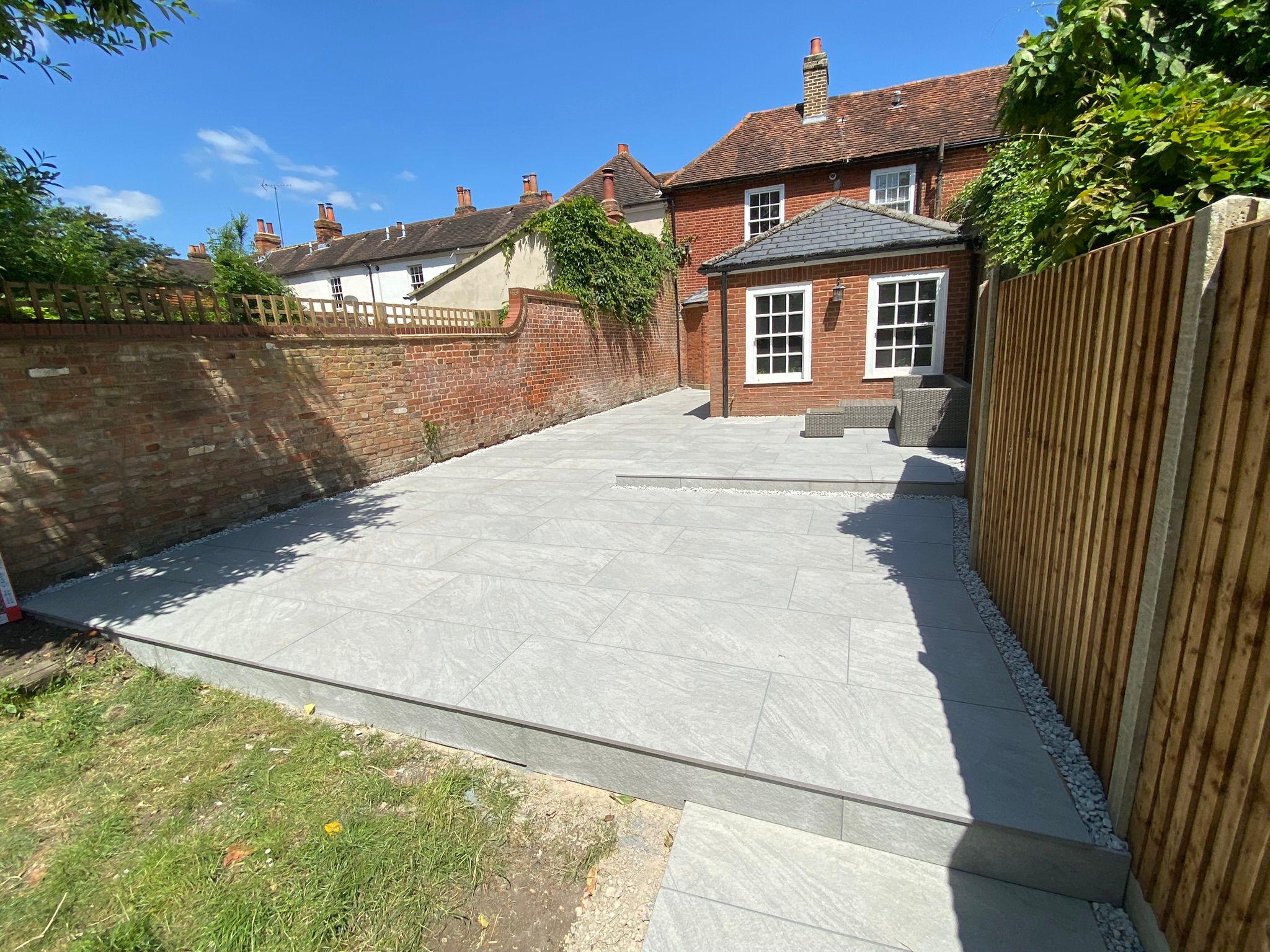
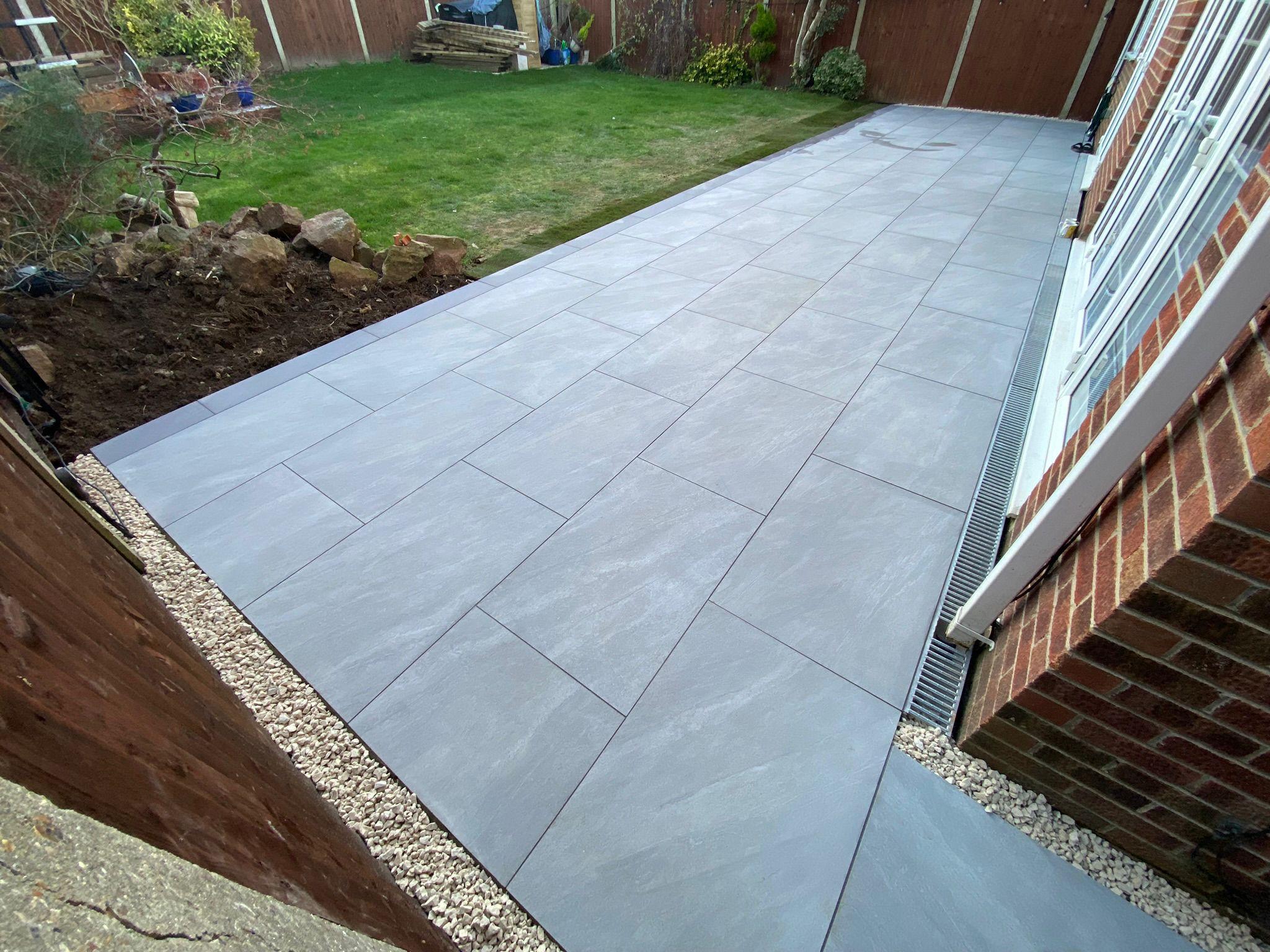
Porcelain is the longest-lasting patio material available for domestic gardens. It is fired at over 1,200 degrees, which makes it extremely dense, frost-proof and resistant to cracking, staining and fading. A quality porcelain patio installed properly should still look new after 30 years. The only real risks are impact damage from very heavy objects and, more commonly, failure of the mortar bed underneath rather than the slab itself.
Natural limestone: 20 to 35 years
Good quality limestone is one of the more durable natural stone options. It is harder and denser than sandstone, which means it resists surface wear better and is less prone to flaking in frost. Sealed properly at installation and re-sealed every two to three years, a limestone patio will age gracefully rather than deteriorating. The colour tends to lighten slightly over time, which many people find attractive.
Indian sandstone: 15 to 25 years
Sandstone is softer and more porous than limestone or porcelain, which means it requires more maintenance and will show its age sooner if neglected. That said, plenty of sandstone patios laid 20 or 25 years ago still look good, the ones that do are the ones that were sealed regularly and had their pointing kept in good condition. If a sandstone patio is re-pointed when needed and sealed every couple of years, you can reasonably expect it to last two decades or more.
Concrete slabs: 10 to 20 years
Standard concrete paving flags are durable under foot traffic but prone to cracking as the ground moves and the concrete weathers. UV exposure causes the surface to fade and spall over time. They rarely look good after 15 years in a UK garden, though they remain fully functional. If appearance matters, concrete flags are a short-to-medium term solution.
Block paving: 20 to 30 years
Clay or concrete block paving, laid on a properly prepared base, is one of the most durable options available. Individual blocks can be lifted and relaid if the base settles, which means minor subsidence does not mean replacing the whole patio. The jointing sand needs topping up periodically, and resin jointing will extend the time between top-ups significantly. Overall lifespan is comparable to sandstone with less surface degradation.
The bottom line
For the longest-lasting patio: porcelain, professionally installed on a 150mm compacted sub-base, with quality resin jointing. If you want the warmth of natural stone and are prepared to maintain it: limestone. The material you choose matters, but it matters less than who lays it and how.